
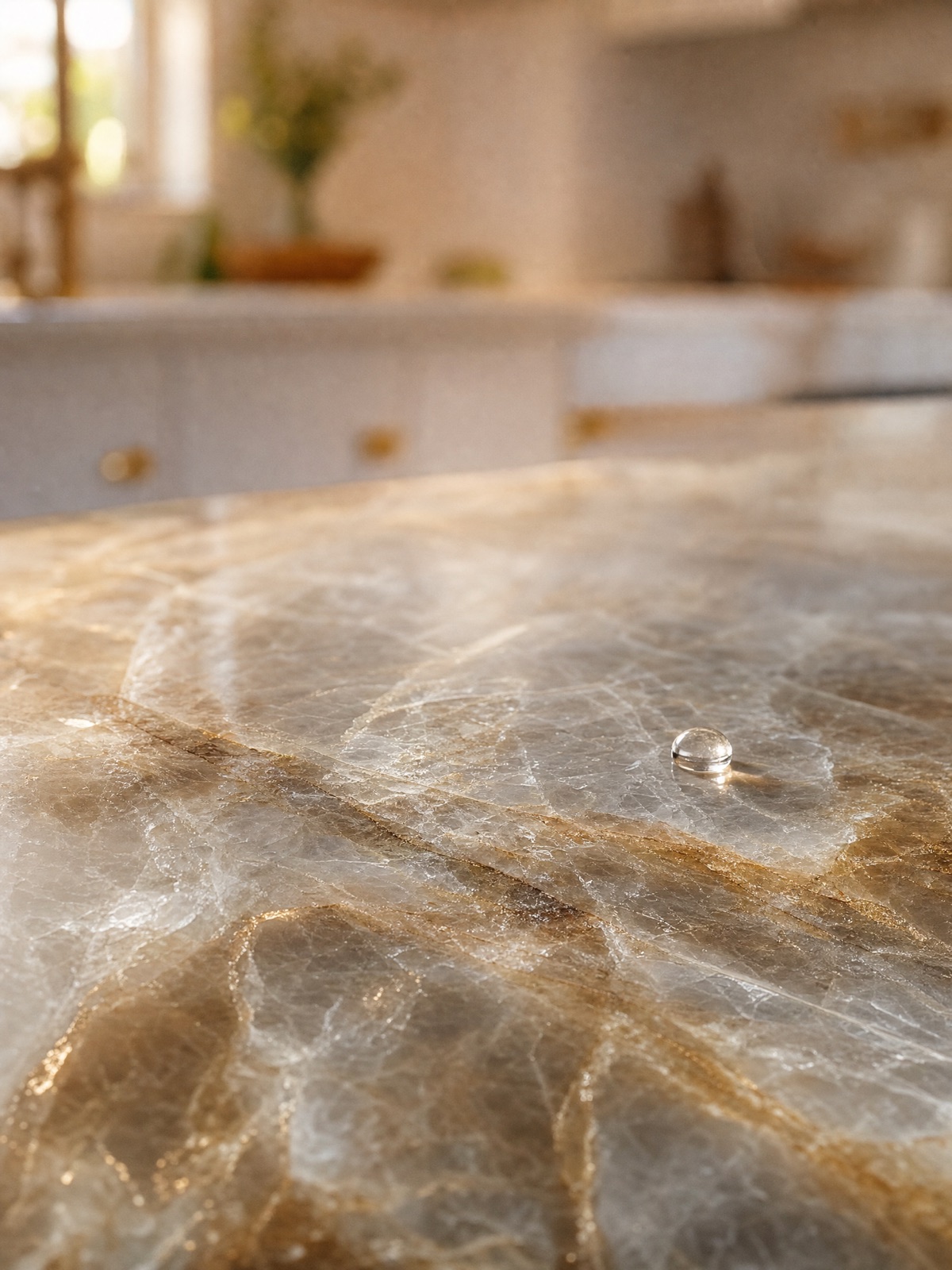
Quartzite Countertops: Pros, Cons & Is It Worth It?
Quick answer: Quartzite is a hard, natural stone that delivers a marble-like look with far more durability — excellent heat and scratch resistance, and (in true quartzite) no etching from kitchen acids. The main trade-offs are a premium price, the need for periodic sealing, and a real risk of buying a softer stone mislabeled as quartzite. For homeowners who cook, love the bright marble aesthetic, and want a surface that lasts decades, quartzite is usually worth it. If you want the lowest maintenance or the lowest price, engineered quartz or granite may suit you better.
At Alpine Countertops, quartzite is one of our favourite stones to fabricate — and one we’re honest about. It’s not flawless, and it’s not the right pick for every kitchen. Here’s the straight, fabricator’s-eye view from our Richmond shop.
Last updated: June 2026
What is quartzite, exactly?
Quartzite is a 100% natural metamorphic stone. It forms when sandstone is buried, heated and compressed over geological time until its quartz grains recrystallize into a dense, hard mass. The result is a predominantly quartz stone — very hard, and in its true form, resistant to acids and scratching.
Critically, quartzite is not the same as engineered quartz (Caesarstone, Cambria, Silestone and similar), which is engineered from ground/crushed stone (predominantly quartz) bound with polymer resin and pigments. The names sound alike but the products are different — we untangle that fully in our quartzite vs quartz guide.
Quartzite pros and cons at a glance
| Pros | Cons |
|---|---|
| Very hard (Mohs ~7–8); excellent scratch resistance | Premium price vs granite or quartz |
| Highly heat-resistant — handles hot cookware well | Needs periodic sealing (it’s natural stone) |
| True quartzite resists etching from kitchen acids | “Soft quartzite” mislabeling risk (really dolomitic marble/marble) |
| Natural marble-like beauty; every slab unique | Limited to natural colours; less colour range than granite or quartz |
| Durable for decades; adds resale appeal | Harder to fabricate — choose an experienced installer |
| UV-stable outdoors (won’t yellow like quartz resin) | Can chip at an unsupported edge if abused, like any stone |
The pros of quartzite countertops
- Exceptional hardness. At around 7–8 on the Mohs scale, quartzite is one of the hardest countertop stones — harder than granite and far harder than marble. Knife edges won’t scratch true quartzite.
- Great heat resistance. As solid natural stone with no resin, quartzite is highly heat-resistant and tolerates hot cookware set briefly on the surface — far better than engineered quartz, whose polymer-resin binder can scorch. (We still recommend trivets as good practice to protect the sealer.)
- Resists etching. True quartzite is mostly inert quartz, so common acids — lemon, wine, vinegar, tomato — don’t etch it the way they etch marble. This is its big edge over marble for cooks.
- Natural marble look. Quartzite gives you that bright, veined, marble-inspired aesthetic with real-stone depth — and every slab is one of a kind.
- Longevity. Properly fabricated and maintained, quartzite lasts for decades and can add to a home’s appeal — a genuine consideration in the Metro Vancouver market.
The cons of quartzite countertops
- Price. Quartzite usually costs more than granite and many engineered quartz lines, especially for sought-after whites and rare blues. See the real numbers in our quartzite cost guide.
- Sealing. As natural stone, quartzite benefits from periodic sealing — it’s very dense, so roughly every 1–2 years is typical depending on the slab and sealer. It’s easy, but it’s not the zero-maintenance story quartz offers.
- The mislabeling trap. There’s no such thing as “soft quartzite.” Some stones sold as “quartzite” are actually a softer stone — commonly dolomitic marble (or marble) — which etches. The test is definitive: true quartzite won’t etch from acid. Buy from a fabricator who verifies the slab.
- Fewer colours. You’re limited to what nature produces — mostly whites, greys, beiges, blues and greens. For bold or unusual colours, granite or quartz offer more.
- Fabrication difficulty. Quartzite’s hardness makes it tougher to cut and finish, so workmanship matters. An inexperienced shop can chip edges or leave a rough finish.
Is quartzite worth it?
For the right homeowner, yes. Quartzite earns its premium when you want the marble look without marble’s fragility, when you cook often and value heat and scratch resistance, and when you plan to keep the kitchen for years. The periodic sealing is minor next to the durability you get.
It’s less compelling if your top priority is the lowest possible price (consider granite) or absolutely zero maintenance (consider engineered quartz). And it’s only “worth it” if you actually get true quartzite — which comes back to choosing a fabricator who verifies what they sell.
How quartzite compares to the alternatives
It helps to see where quartzite sits among the materials we fabricate most:
- vs granite: Quartzite is slightly harder and usually brighter and more marble-like, but typically pricier; granite offers far more colour variety and better value. Full breakdown in our quartzite vs granite guide.
- vs engineered quartz: Quartzite is natural, more heat-tolerant and unique; quartz is non-porous, never needs sealing and offers consistent colour. See quartzite vs quartz.
- vs marble: Quartzite gives the marble look without marble’s etching and softness — the durable alternative for cooks. See quartzite vs marble.
For all materials side by side, including porcelain and quartz, our complete countertop materials guide is the hub.
How do you make sure you’re getting true quartzite?
This is the single most important step, because the “soft quartzite” mislabeling problem is real. A stone sold as quartzite that’s actually dolomitic marble (or marble) will etch and disappoint. A few ways a good fabricator protects you:
- Acid spot test. A drop of an acidic test solution on an inconspicuous spot: true quartzite won’t etch; a softer stone will dull. This test is definitive.
- Scratch/hardness check. True quartzite resists scratching from a steel blade; softer stones don’t.
- Knowing the source. Experienced fabricators recognize which named stones are genuine quartzite versus marketing labels.
At our Richmond shop we verify slabs before selling them as quartzite, and we’re happy to walk you through the test so you can buy with confidence.
Who is quartzite best for?
- Home cooks who want heat tolerance and a surface that won’t etch from everyday acids.
- Marble lovers who can’t accept etching or scratching — quartzite is the durable marble look. Compare directly in our quartzite vs marble guide.
- Buyers choosing between natural stones — if you’re torn with granite, our quartzite vs granite guide lays out the trade-offs.
- Outdoor kitchens, where quartzite’s UV stability beats engineered quartz (whose resin yellows/fades under sustained direct UV, voiding the warranty for outdoor installation).
What does quartzite cost in Metro Vancouver?
Installed quartzite typically runs roughly $110–$180 per square foot in Metro Vancouver, with common colours at the lower end and rare slabs (like vivid blues) exceeding $200. This is a typical Metro Vancouver range; exotic/premium slabs and complex fabrication run higher — request a quote. Edge profile, layout, cutouts and slab rarity all move the number. For a full breakdown of cost drivers and how quartzite stacks up against other materials, see our quartzite cost guide and countertop cost comparison. These are planning ranges — request a quote for your exact project.
Frequently asked questions
Is quartzite worth the money?
For homeowners who want a durable marble look, cook regularly, and plan to keep the kitchen long term, quartzite is usually worth its premium thanks to its hardness, heat resistance and etch resistance. If lowest cost or zero maintenance is the priority, granite or engineered quartz may be a better fit.
What are the disadvantages of quartzite countertops?
The main drawbacks are a higher price, the need for periodic sealing, a more limited natural colour range, and the risk of buying a softer stone mislabeled as quartzite. It’s also harder to fabricate, so workmanship and installer experience matter.
Does quartzite stain easily?
When properly sealed, quartzite resists staining well. Because it’s natural stone, sealing periodically and wiping spills promptly keeps it looking its best. Unsealed or neglected stone is more vulnerable.
How long do quartzite countertops last?
With proper fabrication and basic maintenance, quartzite can last for decades — it’s one of the hardest and most durable natural countertop stones available.
Is quartzite high maintenance?
Not really. It needs periodic sealing and gentle cleaning with mild soap and water, plus the usual sense to use trivets and avoid abrasive or acidic cleaners. It asks a little more than engineered quartz, but far less than marble.
Talk quartzite with Alpine Countertops
Alpine Countertops fabricates quartzite for kitchens across Metro Vancouver and the Fraser Valley from our Richmond facility, and we’ve done it since 2015 (BBB A+). We’ll help you choose a real slab, verify it’s true quartzite, and template, fabricate and install it to last. Call 604-630-5700, email info@alpinecountertops.com, or contact us for a quote. Browse our products and suppliers and Vancouver countertops pages for more.
Last updated: June 2026