
How to Remove Water Spots and Mineral Marks from Quartz Countertops
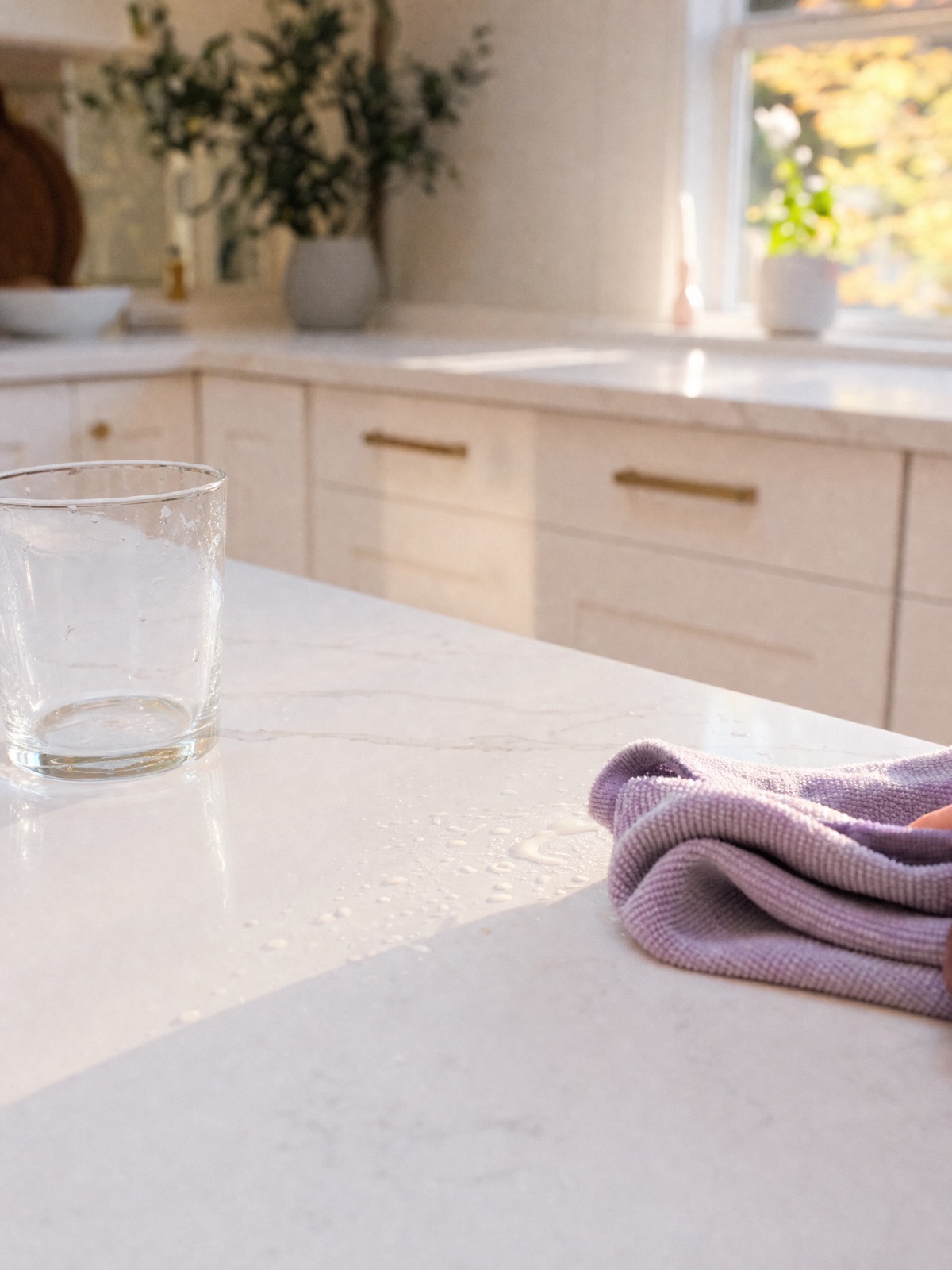
If your quartz keeps showing a cloudy white film or chalky spots, the most useful thing to know is what those marks actually are — because in Metro Vancouver, they are usually not what people assume. Our tap water is very soft, so true hard-water mineral scale is uncommon here; that white residue is far more often soap film, cleaner residue, or dishwasher rinse-aid carryover. This guide shows you how to tell the difference between film, etch and genuine mineral deposits, how to remove each one safely, and what to do if you are one of the Fraser Valley households on well water where real mineral marks do occur. None of it requires harsh chemicals.
What you’ll need
- Mild dish soap (a few drops) and warm water
- Two soft cloths or microfibre cloths — one for cleaning, one for drying
- A plastic scraper or an old credit/loyalty card (to lift, not scratch)
- Rubbing alcohol (isopropyl) for stubborn film, optional
- For well-water mineral deposits only: baking soda and white vinegar (Silestone permits this paste; check your brand first)
- A spray bottle of clean water for rinsing
How to tell film from etch from mineral marks
Before you treat anything, identify it — the fixes are different, and using the wrong one wastes effort.
- Soap or cleaner film looks like a hazy, even cloudiness over a whole area, often worst where you wipe most. It usually wipes back with plain water and a dry cloth. This is the most common “water spot” on Vancouver quartz.
- Dishwasher residue shows up as spots or streaks near the dishwasher or sink, from rinse-aid or softener salt carried on dishes and hands. It also responds to a plain re-wash and dry.
- Genuine mineral deposit is a raised, gritty, often ring-shaped crust you can feel with a fingernail, left where hard water repeatedly dried in the same spot. On Metro Vancouver municipal water this is rare; it is plausible on Fraser Valley well water.
- An etch or dull mark (less common on quartz than on marble) is a change in the finish itself — a duller or lighter patch you can sometimes feel — usually caused by a harsh chemical, not water. Soap and water will not bring it back; if you have a true etch on quartz, that is a job to discuss with a fabricator rather than scrub harder.
The quick test: if it wipes away with soap, water and drying, it was film. If it survives that and feels raised, treat it as mineral scale. If it survives and the surface looks dull rather than crusted, stop and ask a professional before escalating.
Step-by-step: removing water spots and film from quartz
- Re-clean with mild soap and warm water. Put a few drops of dish soap in warm water, wet a soft cloth, and wash the affected area. This alone removes most Vancouver “water spots,” because they are soap or rinse-aid film rather than minerals.
- Rinse with clean water. Wipe the area again with a second cloth dampened in plain water to lift any remaining soap — leftover detergent is itself a cause of cloudiness.
- Dry the surface completely. Buff dry with a clean microfibre cloth. Letting soft water air-dry is what leaves film in the first place, so drying is the step most people skip and most need.
- For stubborn film, use a little rubbing alcohol. If a hazy cast remains, dampen a soft cloth with isopropyl alcohol, wipe the area, then rinse and dry. Alcohol cuts greasy or waxy residue that soap alone leaves behind. HanStone, for instance, lists a rubbing-alcohol-and-water solution among its approved cleaners.
- Lift any spot residue with a plastic scraper. For a localised dried drip, hold a plastic scraper or old card flat against the surface and gently push the residue off, then re-wash. Keep it flat so the edge cannot dig in.
- Adjust your dishwasher and routine if film keeps returning. Recurring spots near the dishwasher usually mean too much rinse-aid or detergent. Reduce the rinse-aid setting, use less detergent, and dry the counter after wiping. With our soft water you need far less of both than the bottle suggests.
If you are on Fraser Valley well water: removing real mineral deposits
This is the one scenario where genuine mineral scale is plausible. Parts of Abbotsford and the Township of Langley draw from groundwater wells that are considerably harder than Metro Vancouver’s mountain-reservoir supply, so repeated drying in the same spot can leave a real crust. If — and only if — you have confirmed a raised mineral deposit and your countertop brand permits it, you can treat it gently.
- Confirm your brand allows a mild acid. Silestone’s own care sheet permits a baking-soda-and-white-vinegar paste for limescale and hard-water marks; Caesarstone permits a diluted 50/50 vinegar rinse. Cambria and HanStone do not state a position, so do not use acid on those — stick to soap, water and a plastic scraper, or call a professional.
- Make a paste. Mix baking soda with a little white vinegar into a spreadable paste (it will fizz).
- Apply and wait. Spread it over the deposit and leave it for 10 to 20 minutes, per Silestone’s guidance — long enough to soften the scale, not so long it dries out.
- Wipe, rinse and dry. Remove the paste with a soft damp cloth, rinse thoroughly with clean water to remove all residue, and buff dry.
- Treat acid as occasional, never daily. Even on brands that allow it, prolonged or repeated acid contact can dull the resin over time. Use this only for actual mineral deposits, then return to soap and water for everyday cleaning.
What to avoid
- Abrasive pads and scouring powders. Steel wool, green pads and gritty powders will scratch the polished surface. Cambria warns against products like Comet and S.O.S pads; HanStone bans abrasive cleansers including the Bar Keepers Friend Soft Cleanser and powder.
- Assuming you have hard water. On Metro Vancouver municipal supply you almost certainly do not. Reaching for a heavy descaler to remove what is actually soap film just adds more chemical residue.
- Blanket use of vinegar. It is brand-specific. Permitted on Caesarstone and Silestone for occasional treatment; not stated for Cambria or HanStone. Never use it as a daily cleaner on any quartz.
- Letting water air-dry. With soft water, skipping the dry step is the single most common cause of recurring film.
- Scrubbing a dull etch. If the mark is a change in the finish rather than a deposit on top of it, scrubbing will not fix it and may make it worse.
When to call a professional
Most water spots are a five-minute fix with soap, water and a dry cloth. Call a fabricator if a white or dull mark survives careful cleaning and feels like a change in the surface itself rather than something sitting on top of it — that points to an etch or chemical damage, which is not something to attack with stronger scrubbing. The same goes for any mark you cannot identify. Alpine fabricates quartz in our own Richmond facility and can tell you honestly whether a mark is removable, whether the finish has been affected, and what your options are.
Frequently asked questions
Does Vancouver have hard water that spots quartz?
No. Metro Vancouver’s tap water is very soft — roughly 2.5 to 4.8 mg/L as calcium carbonate, from the Capilano, Seymour and Coquitlam mountain reservoirs. True hard-water mineral scale is uncommon here, so a white film on your quartz is almost always soap residue, cleaner residue, or dishwasher rinse-aid carryover rather than tap-water minerals.
Why do white spots keep coming back after I clean?
Usually because of leftover soap or rinse-aid and skipping the dry step. Use less dish soap, rinse with plain water, and buff the surface dry with a microfibre cloth. If the spots are near the dishwasher, reduce your rinse-aid and detergent — with soft water you need very little.
Can I use vinegar to remove water spots from quartz?
Only if your brand permits it and you are dealing with genuine mineral deposits. Silestone allows a baking-soda-and-vinegar paste and Caesarstone allows a diluted vinegar rinse; Cambria and HanStone do not state a position. For ordinary Vancouver film, you do not need vinegar at all — soap, water and drying will do it.
What if the mark won’t come off no matter what I try?
If a mark survives careful, non-abrasive cleaning and feels like a dull or rough change in the surface, it is likely an etch or chemical mark rather than a water spot. Stop scrubbing and ask a fabricator, because abrasives can dull the surrounding finish and the wrong fix can make it permanent.
This guide is part of our Quartz Countertop Care Guide.
Get help from Alpine
If a mark on your quartz has you stumped, send us a photo or give us a call before you reach for anything stronger. Alpine Countertops has fabricated and installed quartz across Metro Vancouver and the Fraser Valley since 2015, from our own Richmond facility — BBB A+ accredited, our own crews, no middlemen.
Phone: 604-630-5700
Email: info@alpinecountertops.com
Book a free consultation or learn more about Alpine.