
Removing Wine, Coffee, and Acid Stains from Marble
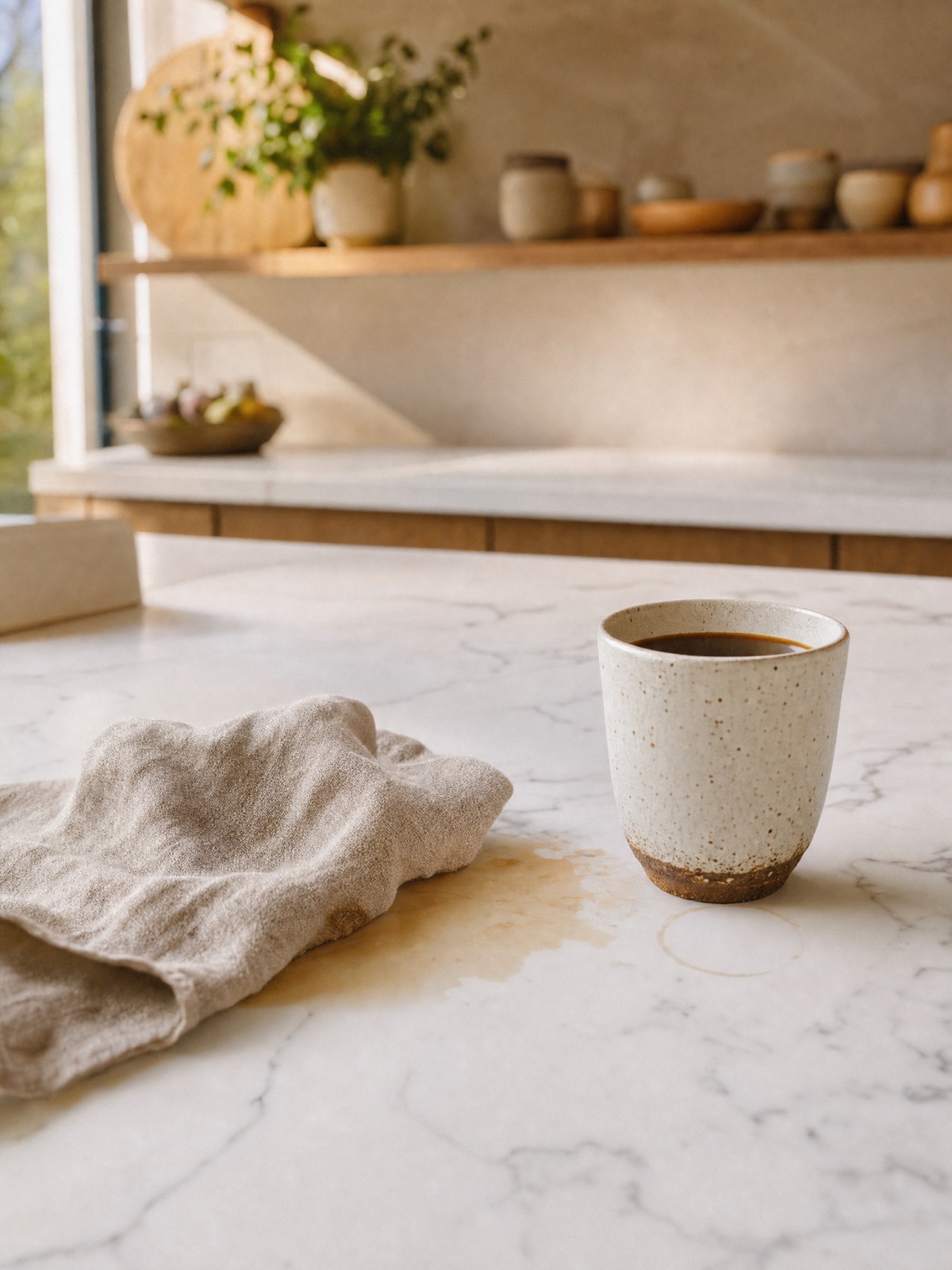
A glass of red wine knocked over on marble and left overnight is the classic marble emergency — and it is also the perfect example of why marble confuses people. That spill can leave behind two different marks at once: a dark stain where the pigment soaked into the stone, and a dull etch where the wine’s acidity dissolved a thin layer of the polished surface. They look different, they are caused by different things, and they need different fixes. This guide shows you how to tell the stain from the etch, draw the stain out with a poultice, and re-polish the etch — in the right order — for wine, coffee, and other acidic spills.
The two marks a spill can leave
Marble is a porous, calcareous (calcium-carbonate) stone, so an acidic and pigmented liquid like red wine attacks it two ways:
- The stain is absorbed colour. Pigment from the wine, coffee, or juice soaks into the pores and sits beneath the surface, leaving a mark that is darker than the surrounding stone and that the surface still feels smooth over. A poultice removes a stain by drawing the absorbed liquid back out.
- The etch is surface damage. The acidity of the wine, coffee, citrus, or tomato reacts with the marble and dulls the polished finish, leaving a mark that is usually lighter than the surrounding stone and that you can often feel as a change in texture. A marble polishing powder re-hones an etch.
So before you do anything, look closely. You may have a stain, an etch, or both. If both, the order matters: remove the stain first, then re-polish the etch, because polishing works on the surface and a poultice works in the pores beneath it.
What you’ll need
- A poultice — either a ready-made stone poultice powder, or a homemade paste of baking soda and water mixed to a thick, spreadable consistency (about the texture of peanut butter)
- Plastic wrap and tape to cover the poultice
- A plastic or wooden spatula / spreader (not metal, which can mark the stone)
- A few soft, clean cloths
- pH-neutral stone cleaner or mild dish soap, and clean water
- For an accompanying etch: a marble polishing powder / etch remover for calcite-based stone
- Optional, for organic stains like wine and coffee: a small amount of hydrogen peroxide (3%, the household strength) to mix into the poultice instead of plain water
A note on the poultice liquid: the absorbent (baking soda or poultice powder) does the drawing-out; the liquid you mix it with is matched to the stain type. For organic stains such as wine, coffee, tea, and fruit, household hydrogen peroxide is commonly used. For oil and grease stains, a different solvent is appropriate. If you are unsure, plain water in the poultice is the safest starting point, and you can escalate.
Step-by-step: removing the stain, then the etch
- Clean the area first. Wipe the spot with a pH-neutral stone cleaner or mild dish soap and warm water, then dry it. This removes any surface residue so you can see clearly what you are dealing with and so the poultice contacts the stain, not the grime.
- Identify stain versus etch. In good light, decide what you have. Darker and smooth equals a stain (continue with the poultice steps). Lighter and you can feel it equals an etch (skip to the polishing steps). Both present means do the poultice first, then polish.
- Mix the poultice. Combine your absorbent (baking soda or poultice powder) with the appropriate liquid — plain water to start, or 3% hydrogen peroxide for an organic stain like wine or coffee — into a thick, spreadable paste.
- Apply the poultice over the stain. Using the plastic or wooden spreader, spread the paste over the stained area about a centimetre thick, extending a little past the edges of the stain.
- Cover and seal it. Lay plastic wrap over the poultice and tape down the edges, leaving it slightly vented if the product directions say so. The cover keeps the poultice from drying too fast, so it has time to pull the stain out.
- Let it dwell, then dry. Leave the poultice in place for the time the product specifies — commonly several hours, and often best left to work overnight. Then remove the cover and let the poultice dry out completely; as it dries it draws the absorbed liquid up out of the stone.
- Remove the poultice and inspect. Scrape off the dried paste with the plastic or wooden spreader, then wipe the area clean with water and dry it. Check the stain. It should be lighter or gone.
- Repeat the poultice if needed. Stubborn stains often need two or three poultice cycles to lift fully. Re-apply and repeat. Deep, old stains may not come out entirely at home.
- Now address any etch. Once the stain is gone (or as much as it will come out), look at the surface again. If there is still a dull, lighter patch you can feel, that is the etch. Re-polish it with a marble polishing powder per the product directions: apply a small amount, buff into the dull spot with a damp soft cloth in small circular motions until the sheen returns, then wipe clean and dry. Repeat if a faint haze remains.
- Finish and consider resealing. Give the area a final clean with stone cleaner and dry it. Because a stain means liquid absorbed into the stone, it is worth checking the seal afterward with the water-bead test and resealing if water no longer beads — see our countertop sealing guide.
What to avoid
- Do not scrub a stain with an acidic or abrasive cleaner. Acid will not lift absorbed colour and will etch the surface further; abrasives scratch it. The colour is in the pores, not on top, so scrubbing the surface cannot reach it.
- Do not polish a stain. Polishing powder works on the surface; it cannot draw colour out of the pores. Use a poultice for the stain and save the polish for the etch.
- Do not poultice an etch. A poultice pulls absorbed liquid from the pores; it does nothing for a dull surface mark. Re-polish an etch instead.
- Do not use a metal tool to spread or scrape the poultice — it can leave marks on the marble. Use plastic or wood.
- Do not assume hydrogen peroxide is safe on every marble. It is commonly used for organic stains, but on some stones peroxide can lighten the area; test on an inconspicuous spot first, or start with a plain-water poultice.
- Do not leave wine, coffee, or citrus to sit in the first place. Prevention is far easier than removal — blot promptly and the stain may never set.
Wine and coffee on marble: prompt action beats any product
The single biggest factor in whether a wine or coffee spill becomes a permanent mark is how fast you respond. The longer an acidic, pigmented liquid sits on marble, the more pigment absorbs and the more the surface etches. We will not put a stopwatch number on it — how quickly a spill sets depends on the liquid, the stone, and the seal — but the rule is reliable: blot it up promptly, do not wipe it. Press a clean cloth straight down to lift the liquid rather than dragging it across more surface, then rinse with water and dry. A good impregnating sealer buys you extra time by slowing absorption, but remember it does not prevent etching, so prompt blotting still matters even on well-sealed marble. If you entertain often on a marble surface, coasters, trays under bottles, and a quick wipe-down between courses go a long way.
When to call a professional
Many wine and coffee marks come out at home with patience and a couple of poultice cycles. Call a professional when:
- A stain will not lift after two or three poultice attempts — old, deep stains sometimes need professional treatment.
- The accompanying etch is deep or large and a polishing powder will not bring it back; even, widespread refinishing is a pro job.
- You are unsure what caused the mark or which fix it needs.
- The surface has chips or cracks in addition to the stain.
As a fabricator, Alpine can assess whether a stubborn mark calls for professional stain treatment, refinishing, or — rarely — replacement, and give you an honest answer rather than sending you through endless poultice cycles on a stain that will not move.
Frequently asked questions
Why did one wine spill leave both a dark mark and a dull mark?
Because red wine is both pigmented and acidic, it can damage marble two ways at once. The dark mark is a stain — pigment absorbed into the pores beneath the surface. The dull mark is an etch — the wine’s acidity dissolved a thin layer of the polished finish. They need different fixes: a poultice draws the stain out, and a marble polishing powder re-hones the etch. Do the poultice first, then polish.
Does a poultice remove etching too?
No. A poultice only removes stains, by pulling absorbed liquid out of the stone’s pores. Etching is surface damage, not absorbed liquid, so a poultice does nothing for it. Once you have removed the stain, re-polish any remaining dull, lighter patch with a marble polishing powder. Matching the right fix to each mark is the key to getting marble looking right again.
What can I use to make a poultice at home?
A simple poultice is baking soda mixed with liquid to a thick, spreadable paste. For organic stains like wine, coffee, and tea, household 3% hydrogen peroxide is commonly used as the liquid, though you should test it on an inconspicuous area first, since on some stones peroxide can lighten the surface. Plain water is the safest starting liquid. Spread the paste over the stain, cover with plastic wrap, let it dwell and then dry, and scrape it off.
How long should I leave a poultice on marble?
Follow the product’s directions, but a poultice is generally left in place for several hours and is often best left to work overnight, then uncovered and allowed to dry completely so it draws the stain up out of the stone. Stubborn stains commonly need two or three full cycles. If the stain has not improved after a few attempts, it is time to call a professional rather than keep repeating.
This guide is part of our Marble Countertop Care Guide →, which explains the full etch-versus-stain picture, daily cleaning, sealing, and where marble works best in a Metro Vancouver home.
Get help from Alpine
If a wine, coffee, or acid mark on your marble will not budge, or you would like it assessed before you keep treating it, call 604-630-5700 or email info@alpinecountertops.com. We will tell you honestly whether it is a stain, an etch, or both, and what it will take to put it right. You can also reach us through our contact page.