
Countertop Dos and Don’ts: A Care Checklist by Material
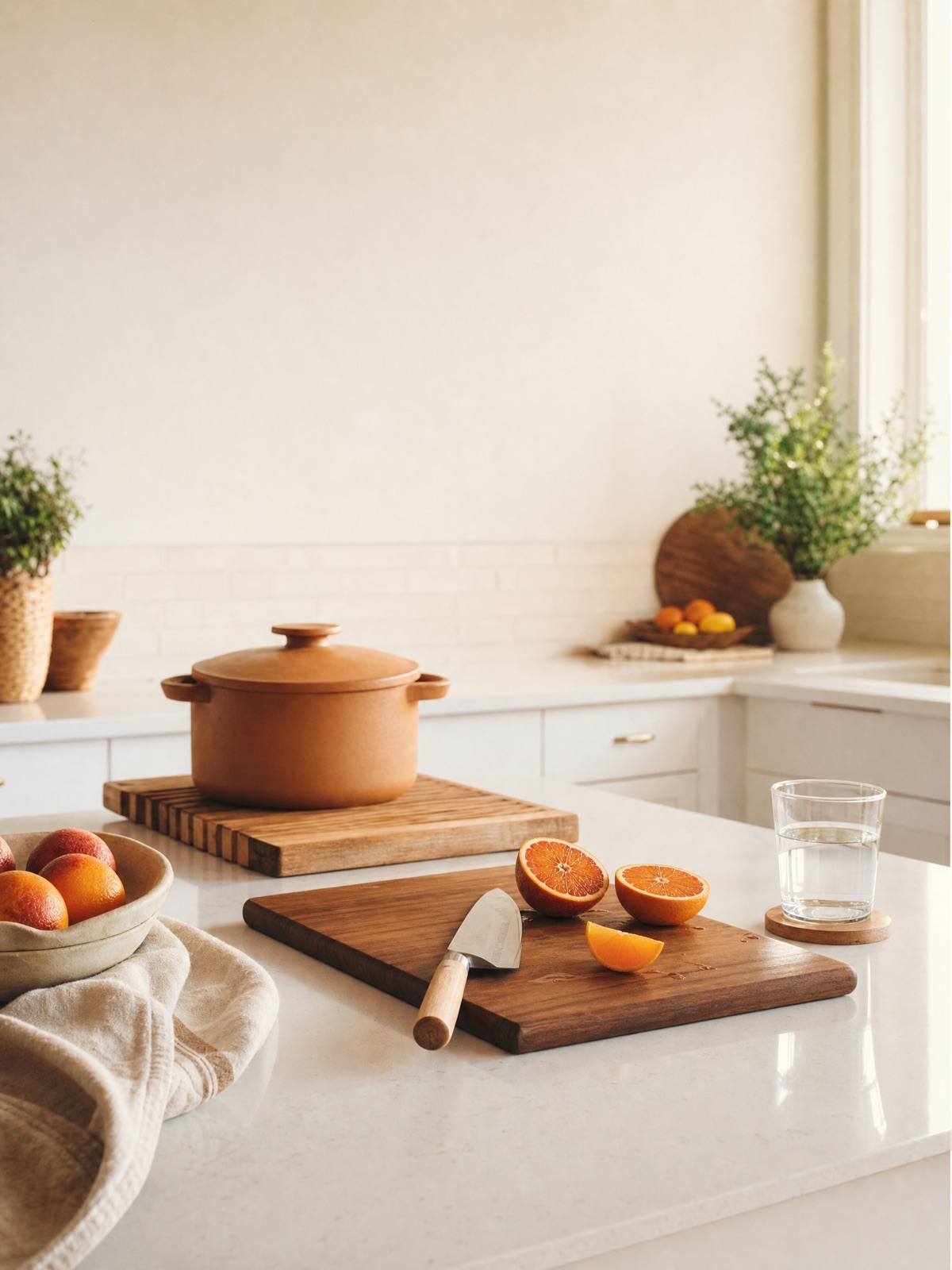
Most countertop damage we are called to repair was preventable. A cutting board, a trivet, a wiped-up spill — small habits that cost nothing — prevent the chips, scratches, etches, and burns that cost real money to fix, if they can be fixed at all. These countertop care tips are the prevention checklist we wish every homeowner had on day one. It starts with the universal rules that apply to any surface, then breaks down the material-specific dos and don’ts for quartz, granite, and marble, because what protects one can harm another. Acid that an engineered quartz shrugs off will permanently etch marble; the heat a granite tolerates will scorch quartz. Knowing your material is the whole game.
The universal checklist (every countertop)
Do:
- Use a cutting board, always. Even hard, scratch-resistant surfaces dull knives and can be marked by them; a board protects both the counter and your blades.
- Use trivets and hot pads under anything hot. Pots, pans, slow cookers, oven trays, and small appliances like kettles and air fryers all go on a heat-resistant pad, never straight onto the surface.
- Use coasters under glasses and bottles. Particularly anything acidic or coloured — wine, citrus drinks, oils.
- Wipe spills promptly. The longer a liquid sits, the more likely it stains or, on marble, etches. Prompt cleanup is the single most effective stain-prevention habit there is.
- Clean with mild dish soap and warm water and a soft or microfibre cloth. This is the daily method every major manufacturer recommends, across quartz and natural stone alike.
Don’t:
- Don’t sit or stand on your countertop. Stone is strong under even, downward load but cracks under concentrated point loads and leverage, especially near sink and cooktop cut-outs. Never use a counter as a step stool or a seat.
- Don’t put excessive weight at a cut-out or an unsupported overhang. The areas around a sink or cooktop, and any overhang past its support, are the weak points where cracks start.
- Don’t use abrasive scouring pads or scouring powders. They scratch and dull most surfaces; reserve gentle, non-scratch sponges for stubborn spots.
- Don’t drag cookware, ceramics, or heavy appliances across the surface. Lift, don’t slide — dragging is a common cause of scratches.
- Don’t leave standing water from a leaking tap or a wet dish rack to sit indefinitely, particularly over a seam, where it can reach the substrate.
Quartz (engineered): dos and don’ts
Engineered quartz is non-porous, never needs sealing, and resists staining well — which makes its real weakness easy to forget: heat.
Do:
- Use trivets and hot pads without exception. This is the most important quartz rule. The resin that binds quartz scorches permanently, so direct heat is the damage most likely to be unrepairable. Caesarstone, for example, advises never placing anything hotter than about 300°F (≈150°C) directly on the surface.
- Clean daily with a few drops of mild dish soap in warm water. This is what Caesarstone, Cambria, Silestone, and HanStone all recommend.
- Check your specific brand’s care sheet for stain treatment. Brands genuinely differ — Caesarstone permits its powdered cleanser for rust marks, while HanStone bans abrasive cleansers. Follow your own brand.
Don’t:
- Don’t put hot cookware straight onto quartz. Worth repeating, because it is the number-one cause of permanent quartz damage.
- Don’t use a Magic Eraser or other melamine/abrasive pad on quartz. It can dull the finish, which cannot be re-polished at home.
- Don’t assume a cleaner that is fine on one brand suits yours. Bar Keepers Friend and vinegar are brand-specific on quartz: Caesarstone permits a 50/50 vinegar-water rinse and its powder for rust; Silestone permits a vinegar rinse for occasional stain and limescale removal; HanStone bans its abrasive cleanser; Cambria does not state a position. When in doubt, mild soap and water is universally safe.
- Don’t use harsh solvents, oven cleaner, or undiluted bleach. These can damage the resin and finish.
Granite (natural stone): dos and don’ts
Granite is heat-tolerant and hard-wearing, but it is natural stone — porous to a degree, and reliant on a sealer to resist staining.
Do:
- Keep it sealed. Granite needs periodic resealing to resist stains. Rather than follow a fixed calendar, use the water-bead test: a few drops of water that bead means the seal is intact; water that soaks in and darkens within a few minutes means it is time to reseal. Our countertop sealing guide covers this in full.
- Wipe up oil, wine, and coffee promptly. On under-sealed granite these can soak in and stain; prompt cleanup prevents it.
- Use a stone-safe, pH-neutral cleaner or mild dish soap and water.
Don’t:
- Don’t rely on acidic cleaners. Granite is siliceous and relatively acid-resistant per the Natural Stone Institute, but acidic cleaners can still degrade the sealer over time, leaving the stone vulnerable. Skip routine vinegar and citrus cleaners.
- Don’t let stains sit. An oil stain that has soaked in needs a poultice to draw it out, a slower fix than simply wiping promptly.
- Don’t use abrasive pads that can dull the polish.
Marble (natural stone): dos and don’ts
Marble is beautiful and the least forgiving common countertop. It is calcareous — composed largely of calcium carbonate — which means acid does not just risk the sealer, it chemically etches the stone itself. This is the single most important thing to understand about living with marble.
Do:
- Use coasters and boards religiously. Wine, lemon, vinegar, tomato, and many everyday foods are acidic enough to etch marble on contact.
- Wipe acidic spills immediately. With marble, seconds matter — the longer an acid sits, the worse the etch.
- Clean only with a pH-neutral stone cleaner or mild dish soap and water. Marble demands non-acidic cleaners specifically.
- Keep it sealed, and use the water-bead test to judge when to reseal. Sealing slows staining, though it does not prevent etching.
Don’t:
- Don’t use vinegar, lemon, or any acidic cleaner on marble — ever. Unlike on quartz, where vinegar is brand-specific, on marble it is simply forbidden: acid etches calcareous stone, leaving a dull, lighter mark you can often feel. This is a chemical reaction, not a stain, and it is not something you clean off.
- Don’t confuse an etch with a stain. An etch is lighter and you can feel it; a stain is darker and you cannot. They need different fixes — light etches take a marble polishing powder, stains take a poultice — so do not polish a stain or poultice an etch.
- Don’t set glasses of wine or citrus directly on marble. A ring etch from an acidic drink is one of the most common marble regrets.
- Don’t use abrasive pads or scouring powders, which scratch the soft surface.
A note for Metro Vancouver homes
One local point worth knowing: the cloudy film some Lower Mainland homeowners see and assume is hard-water scale usually is not. Metro Vancouver’s tap water is very soft — roughly 2.5 to 4.8 mg/L hardness from the Capilano, Seymour, and Coquitlam reservoirs — so residue here is far more often soap film, cleaner residue, or dishwasher rinse-aid carryover than mineral deposits. The fix is gentler, more thorough rinsing, not a harsh descaler that could harm your surface. Genuine mineral spotting is more likely for Fraser Valley households on groundwater wells, in parts of Abbotsford and Langley Township.
When to call a professional
Prevention handles most things, but call a fabricator when a chip is larger than a small fingernail, when you see a crack or a separated seam, when marble has etched beyond a light mark, or when a quartz burn will not clean off. Doing the right small thing early — a trivet, a board, a prompt wipe — is what keeps these calls rare. If you are unsure whether something is damage or just residue, a photo and a phone call usually settle it.
Frequently asked questions
Is it safe to use vinegar on all countertops?
No, and this is the most common care mistake. On marble, vinegar is forbidden outright: it is acidic and etches the calcium carbonate in the stone, leaving permanent dull marks. On engineered quartz it is brand-specific: Caesarstone and Silestone permit a vinegar rinse, while Cambria and HanStone do not state a position. On granite, acidic cleaners can degrade the sealer over time. The universally safe daily cleaner across every surface is a few drops of mild dish soap in warm water.
Can I put a hot pan directly on my countertop?
No, not on any countertop, and especially not on quartz. Engineered quartz is bound with a polymer resin that scorches permanently from direct heat, so a hot pan can leave a mark that cannot be repaired. Granite tolerates heat far better, but direct heat can still affect a surface sealer. Always use a trivet or closed-weave hot pad under pots, pans, slow cookers, and oven trays, every time.
Why can’t I sit or stand on my countertop?
Stone is strong under even, downward weight but vulnerable to concentrated point loads and leverage, particularly near sink and cooktop cut-outs and at unsupported overhangs, which are the natural weak points. Sitting on the edge, standing on the surface to reach a cupboard, or letting a child climb up can crack the slab at a cut-out. A crack is a professional repair and sometimes means replacing a section, so treat the counter as a work surface, not furniture.
What is the one habit that protects a countertop most?
Wiping up spills promptly, closely followed by always using trivets and cutting boards. Prompt cleanup prevents staining on every material and etching on marble; trivets prevent the permanent heat damage that is the costliest to repair on quartz; boards prevent scratches and protect your knives. None of these costs anything, and together they prevent most of the damage fabricators are called to fix. See our full countertop repair guide for what to do when prevention was not enough.
This checklist is part of our Countertop Repair Guide →. For material-specific deep dives, see our quartz, granite, and marble care guides, plus our sealing guide.
Get help from Alpine
Questions about caring for your specific countertop, or not sure what material you have? We are happy to help. Call 604-630-5700 or email info@alpinecountertops.com. Alpine Countertops fabricates in our own Richmond facility and serves homeowners across Metro Vancouver and the Fraser Valley. You can also reach us through our contact page.