
Porcelain Countertops in Vancouver: The Quiet Alternative to Quartz and Granite
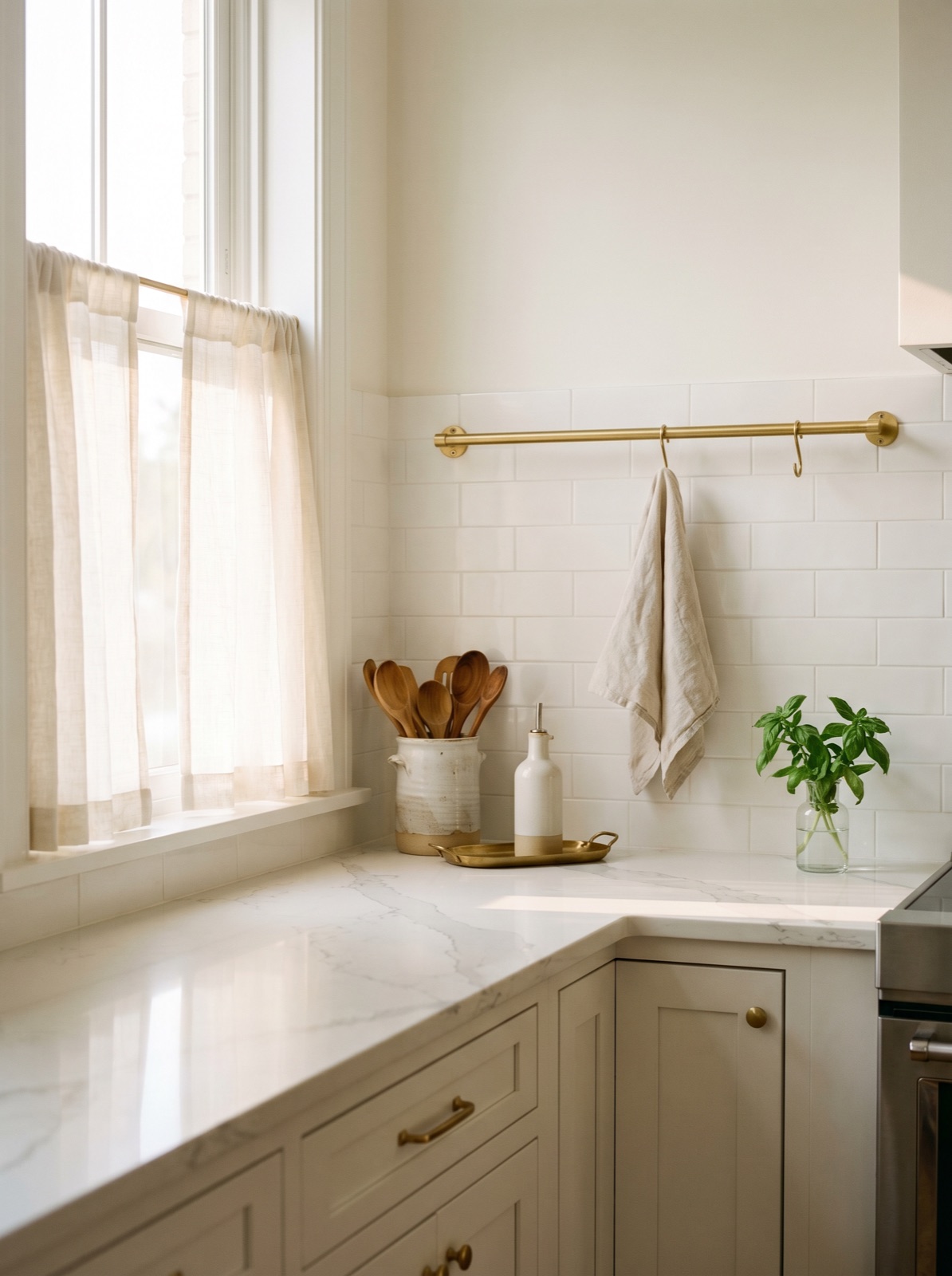
If you toured a Metro Vancouver kitchen in 2020, quartz and granite owned the conversation. In 2026, porcelain is the material the designer slips into the proposal, hoping you’ll ask about it. Porcelain countertops in Vancouver homes are still rare enough to turn heads, but the underlying technology — large-format sintered slabs from names like Dekton, Neolith, and Laminam — has matured fast.
This guide is honest about both sides. Porcelain solves real problems quartz and granite can’t. It also introduces new ones, mostly around fabrication. Here’s what a Vancouver homeowner should actually know before putting porcelain on the shortlist.
What is a porcelain countertop?
A porcelain countertop is a large, thin ceramic slab made from natural minerals — kaolin and ball clay, feldspar, quartz, and trace metallic oxides for pigment — pressed under enormous pressure, then fired in a kiln at around 1200°C. According to porcelain tile standards (ISO 13006 and BS EN 14411), the result is a vitrified surface with water absorption under 0.5%, which is what makes it effectively non-porous.
The category includes a few names Vancouver designers will mention:
- Dekton (Cosentino) — technically its own category. Cosentino describes Dekton as an “innovative ultracompact surface” rather than porcelain, made through a proprietary process using up to 25,000 tons of press pressure.
- Neolith — self-described as “sintered stone surfaces.”
- Laminam — described by the company as large-format ceramic slabs.
- Inalco (MDi), Lapitec, and a growing list of Italian and Spanish producers.
These are often grouped under the umbrella “porcelain slab” or “sintered stone,” but the technical terminology matters when you’re reading warranty documents.
Porcelain vs quartz: the short version
Quartz and porcelain aim at different buyers. Quartz is engineered for warmth and color variety, with a polymer binder (about 7–10%) holding ground quartz together. Porcelain is pure mineral, fired into one continuous sintered slab.
Porcelain is harder, more heat-tolerant, and UV-stable — so it’s the better material outdoors and near cooktops. Quartz is easier to fabricate locally, comes in more colors, and feels slightly warmer under the hand. Most of the Vancouver homes on Alpine’s books still choose quartz for the kitchen. Porcelain wins when the project has a specific challenge — an outdoor kitchen, a waterfall island with no visible seam, a fireplace surround.
If you’re still comparing the basics, our quartz vs granite guide for Vancouver kitchens covers the first-level decision most homeowners make before they even consider porcelain.
Porcelain’s advantages
Heat tolerance. Porcelain’s body holds up to direct heat better than quartz, which softens its polymer binder over time if you park a hot pan in the same spot. Dekton carries A1 fire-rating certification (non-combustible, the highest European class). Cosentino describes Dekton as having a low coefficient of thermal expansion, meaning it handles temperature swings without cracking. That said, no manufacturer recommends you treat it as a trivet.
UV stability — the outdoor kitchen advantage. Cosentino states directly that “Dekton is unaffected by ultraviolet rays. Its colour does not fade or degrade overtime.” For a Vancouver outdoor kitchen that sees summer sun from May through September and rain the rest of the year, that’s the single biggest reason to pay the porcelain premium. Quartz, by contrast, is not recommended outdoors — most brands explicitly void warranty coverage for exterior installation. (We cover this in depth in our outdoor countertop guide.)
Stain resistance. With water absorption under 0.5%, porcelain essentially doesn’t absorb red wine, coffee, olive oil, or any of the usual kitchen suspects.
Scratch resistance. Porcelain is harder than quartz and most natural granites. Cosentino notes Dekton “withstands abrasion, outperforming standard porcelain.” You still don’t cut directly on it — cutting boards protect your knives, not the stone.
Porcelain’s limitations
Porcelain is demanding to fabricate. The slabs are hard — so hard that standard stone-shop tooling struggles. Fabrication requires diamond blades, CNC equipment, and a workflow designed around the material. In Metro Vancouver, fewer shops are set up for it than for quartz, which affects both lead time and price.
Thin edges can chip if the fabricator cuts or handles them wrong. A waterfall edge in 12mm porcelain looks elegant, but executing the mitre cleanly takes skill. Inventory is also thinner locally — quartz ships by the container from multiple Vancouver suppliers; porcelain patterns sometimes require a special order from the brand’s Spanish or Italian distributor.
Finally, the color range, while growing each year, is narrower than quartz. If you want a specific warm, multi-tonal marble look, you’ll find more options in Caesarstone or Silestone quartz than in Dekton.
Large-format slabs and what they enable
Porcelain’s signature move is the large-format slab. Dekton’s standard large format is 3200 × 1440 mm (approximately 126 × 57 inches), with a smaller 710 × 710 mm tile format also available. Neolith offers comparable large formats, and the category trend is toward even larger slabs.
That size unlocks design moves that are hard in quartz or granite:
- Waterfall islands with no visible seam on the end panel. Traditional slabs force a seam where the top meets the side; a large-format porcelain slab can wrap the whole island in one piece. See our waterfall edge guide for how this looks in practice.
- Full-height backsplash in one continuous surface. No horizontal seam between countertop and wall.
- Book-matched islands — two adjacent slabs mirror a vein pattern across the seam, which only works when the slab is big enough to cover the whole island.
Thickness options
Dekton comes in 4 mm (Dekton Slim), 8, 12, 20, and 30 mm. Countertop standard is 12 mm, sometimes built up with a mitred edge to read as thicker (20 mm or “2 cm” profiles remain the standard visual weight Vancouver buyers expect). The 4–6 mm formats are primarily for wall cladding and furniture, not countertops.
For edge profile choices that suit 12 mm porcelain, our edge profile guide walks through the options — mitred is the most common for large-format porcelain, because it gives a thicker visual read without the fabrication risk of a pencil edge on thin material.
Porcelain vs Dekton — are they the same?
Strictly, no. Porcelain is a ceramic classification (kaolin-heavy, fired at ~1200°C, vitrified). Dekton is Cosentino’s proprietary ultracompact material — Cosentino deliberately does not call it porcelain in its current marketing, positioning it as its own category with an expanded mineral composition. For the purpose of specifying a countertop, though, a Vancouver homeowner can treat Dekton, Neolith, Laminam, and true porcelain slabs as close cousins. The fabrication workflow, design possibilities, and performance profile overlap heavily.
When you’re reading a warranty or a spec sheet, read carefully — the terms matter. When you’re choosing what goes in your kitchen, the differences are usually academic.
Is porcelain right for Vancouver homes?
Porcelain earns its premium in specific situations:
- Outdoor kitchens (West Vancouver, White Rock, North Shore decks) — the UV-stability case is clear.
- Waterfall islands where you want no visible seam on the end panel.
- High-use kitchens with avid cooks who park pans on the counter.
- Fireplace surrounds and hearth cladding, where heat and scale matter.
- Modern minimalist projects where the 12 mm profile and concrete-look or pure-white patterns suit the design language.
It’s less right for:
- Budget-sensitive projects. Material plus the more specialized labour runs above comparable quartz.
- Deep undermount sink cutouts with narrow rails — possible, but requires a fabricator who has done it many times.
- Homes that change countertops often. Porcelain is a long-term commitment; the fabrication premium is worth it if you’re staying put.
For a kitchen refresh focused on color and livability rather than a specific performance problem, 2026’s quartz trends still deliver most of what Vancouver homeowners want. We cover those in our countertop trends guide for 2026.
Planning a Kitchen or Bath Countertop Project in Metro Vancouver?
Alpine Countertops has been crafting premium quartz, granite, marble, and porcelain surfaces in our Richmond facility since 2015. We serve homeowners across Vancouver, Burnaby, Richmond, Surrey, West Vancouver, North Vancouver, Coquitlam, New Westminster, and Langley.
Still weighing materials? We can bring physical samples to your home — seeing porcelain and quartz side-by-side in your own kitchen light beats any showroom comparison.
Book a free design consultation:
– 📞 604-630-5700
– 📍 Fabrication facility: Richmond, BC
– 🌐 Browse our gallery · View countertop materials · Get in touch
Alpine Countertops — Professionals Bringing Style to Life.